Designing Scalable APIs: REST, GraphQL, and Beyond
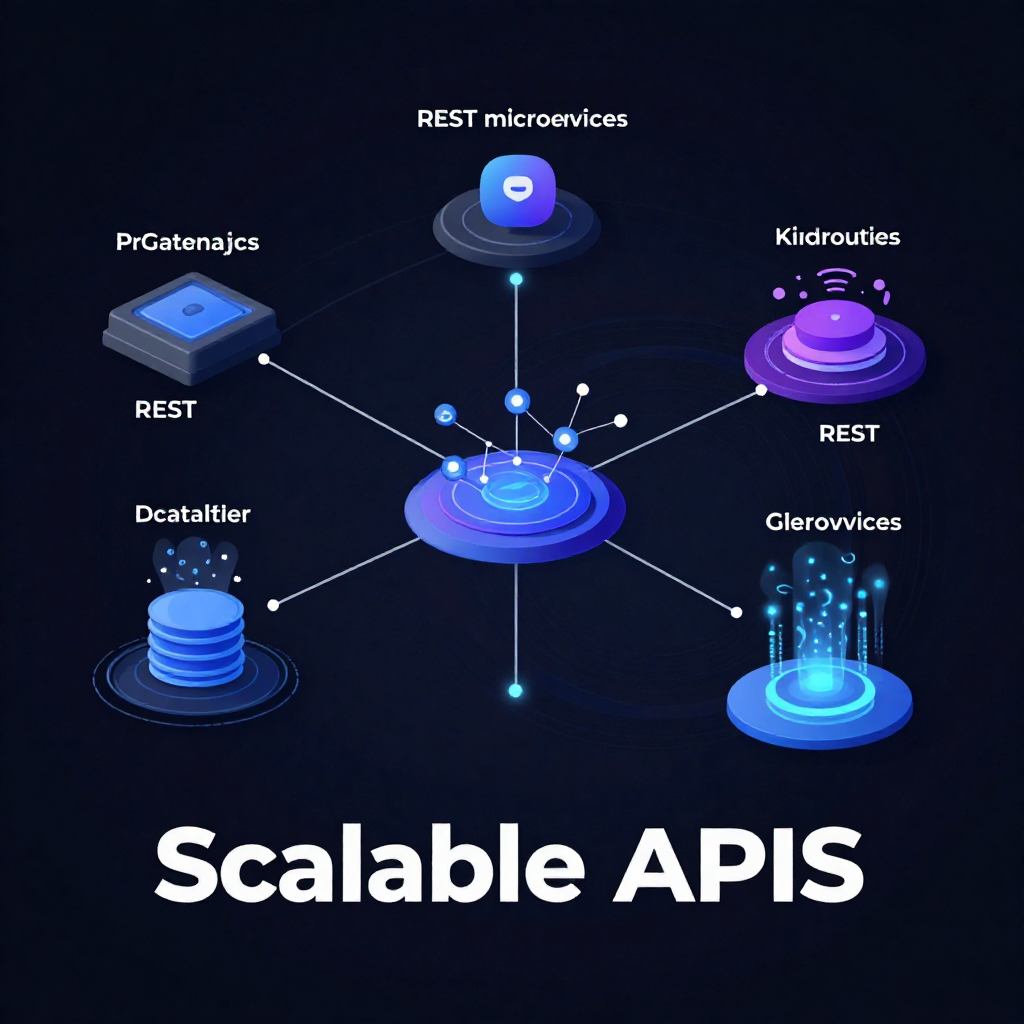
Most APIs work well in the early stages of a product because the system is simple, traffic is limited, and data requirements are predictable. As usage grows, however, the same API begins to show limitations, since it now has to handle more requests, support different types of clients, and deliver data efficiently without slowing down the system.
This is the point where API design becomes critical. It is no longer just about returning data correctly, but about ensuring that the system continues to perform reliably as demand increases.
Whether the API is built using REST or GraphQL, scalability depends less on the technology itself and more on how the API is structured, optimized, and maintained over time.
What Makes an API Scalable?
A scalable API is not simply one that can handle more requests, but one that continues to perform consistently while remaining easy to maintain and extend as the system evolves.
It maintains performance as usage grows
As the number of users increases, the API must process requests efficiently without delays or failures. This depends on how data is retrieved, how responses are structured, and how resources are utilized. For instance, an API that performs well with a small user base may begin to slow down significantly when query complexity increases or when large amounts of data are returned without optimization.
It allows changes without disruption
As applications evolve, APIs need to support new features and updates without affecting existing users. A well-designed API makes it possible to introduce changes gradually, ensuring that older versions continue to function while newer ones are adopted. Without this flexibility, even small updates can lead to compatibility issues.
It supports multiple clients efficiently
Modern APIs are expected to serve a variety of clients, including web applications, mobile apps, and third-party services. Each of these clients may require different types of data, and a scalable API ensures that these needs are met without unnecessary duplication or excessive load on the system.
REST vs GraphQL: Choosing the Right Approach
The discussion around REST and GraphQL often focuses on which one is better, but in practice, the decision depends on how the API will be used and what kind of flexibility is required.
REST works well for structured and stable use cases
REST APIs follow a predictable structure in which each endpoint returns a predefined set of data. This approach works well when data requirements are consistent and do not change frequently, as it keeps the system simple and easier to maintain. For example, an API that provides user profile information with fixed fields is often better suited to REST.
GraphQL supports flexible data requirements
GraphQL allows clients to request only the data they need, which makes it particularly useful in scenarios where different clients require different combinations of information. This reduces unnecessary data transfer and improves efficiency, especially in applications with complex interfaces.
Real-world systems often combine both
In many cases, organizations do not rely on a single approach but use REST and GraphQL together, depending on the requirements of different parts of the system. REST may be used for stable backend services, while GraphQL is introduced for client-facing applications that need more flexibility in data fetching.
Key Design Principles for Scalable APIs
Scalability is achieved through consistent design decisions that make the API predictable, efficient, and easy to work with over time.
Keep the structure simple and consistent
An API that follows clear naming conventions and consistent response formats is easier to use and maintain. When endpoints are predictable, developers can integrate and extend the system without confusion, which becomes increasingly important as the API grows.
Use versioning to support evolution
Since APIs change over time, versioning is essential to ensure that updates do not break existing clients. By maintaining multiple versions, teams can introduce improvements while allowing users to transition gradually.
Focus on performance from the beginning
Performance should be considered early in the design process rather than addressed later. This includes optimizing database queries, implementing pagination for large datasets, and using caching where appropriate. Addressing these factors early helps prevent bottlenecks as traffic increases.
Build security into the design
Security becomes more critical as APIs scale and handle more data. Implementing authentication, authorization, and rate limiting ensures the system remains protected as usage increases.
Handling Large-Scale Traffic
Managing large-scale traffic requires more than just increasing capacity; it involves designing systems that efficiently distribute and process requests.
Use caching to improve response times
Caching reduces the need to process the same request repeatedly by storing frequently accessed data. This improves performance and reduces load on the system, especially for endpoints that are accessed frequently.
Control usage with rate limiting
Rate limiting ensures that no single client can overwhelm the system by restricting the number of requests within a given time frame. This helps maintain stability and prevents abuse.
Distribute load across systems
Load balancing distributes requests across multiple servers, preventing any single instance from becoming a bottleneck. This improves both performance and reliability.
Maintain visibility and response readiness
As APIs scale, identifying and resolving issues becomes more challenging because problems can affect multiple services at once. Having proper monitoring and incident management systems in place ensures that teams can detect and respond to issues quickly. Platforms like itechops help by providing a centralized view of alerts and incidents, making it easier to manage complex API environments.
Common Mistakes in API Design
Many APIs face scalability issues not because of the technology used, but because of decisions made during the design phase.
Overcomplicating the system
Adding unnecessary complexity makes APIs harder to maintain and increases the likelihood of errors, especially as the system grows.
Ignoring real usage patterns
APIs that are not designed with actual client needs in mind often result in inefficient data handling and poor performance.
Lack of proper documentation
Without clear documentation, APIs become difficult to use, slowing development and integration.
Delaying optimization
Waiting until performance issues become severe often leads to more complex and costly solutions.
Beyond REST and GraphQL
As systems evolve, new approaches to API design continue to emerge, offering different ways to handle communication between services.
Event-driven APIs for real-time systems
Event-driven architectures allow systems to react to changes as they happen, rather than relying only on request-response patterns.
gRPC for high-performance communication
gRPC is often used for internal communication where speed and efficiency are critical, particularly in microservices architectures.
API gateways for centralized control
API gateways provide a single entry point for managing traffic, security, and routing, which becomes essential in complex systems.
Conclusion
Designing scalable APIs requires more than choosing between REST and GraphQL. It involves creating systems that can handle increasing demand while remaining stable, efficient, and easy to evolve.
The most effective APIs are those that balance simplicity with flexibility, ensuring that they can grow with the system without becoming difficult to manage. Over time, it is this balance that determines whether an API continues to perform well or becomes a limitation.
FAQs
When should you choose GraphQL over REST?
GraphQL makes more sense when different clients need different sets of data, and you want to avoid creating multiple endpoints for each use case. If your data requirements are simple and consistent, REST is usually easier to manage and maintain.
Can REST APIs handle large-scale applications effectively?
Yes, REST can scale well when designed properly with caching, pagination, and efficient data handling. Many large systems still rely on REST, but they often add additional layers like caching and load balancing to maintain performance at scale.
How do you test API scalability before traffic increases?
Teams usually simulate load using testing tools to understand how the API behaves under stress. This helps identify bottlenecks in queries, response times, and infrastructure before real users start experiencing issues.
What role does an API gateway play in scaling APIs?
An API gateway acts as a central entry point that manages routing, authentication, and rate limiting. It helps simplify how clients interact with services and provides better control over traffic and security.
How do APIs fail under high traffic?
APIs usually fail due to slow database queries, unoptimized responses, or lack of rate limiting. In many cases, the issue is not the traffic itself but how the system handles it under pressure.
How do teams manage API incidents at scale?
Teams rely on monitoring and incident management systems to track performance and detect failures early. Having a centralized view of alerts helps identify related issues and reduces the time needed to resolve them.

0 Comments